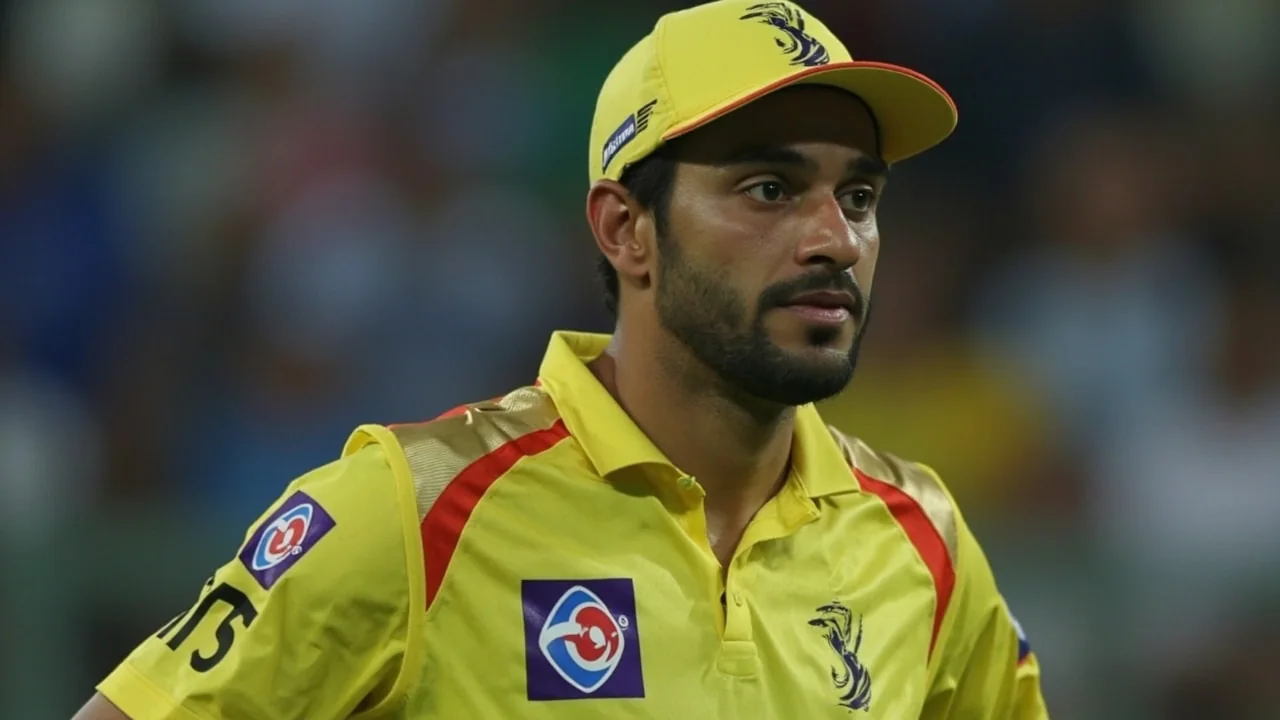
On the afternoon of 10 May 2026, Chennai Super Kings hosted Lucknow Super Giants in the 53rd match of IPL 2026 at MA Chidambaram Stadium, Chepauk. The fixture carried a 3:30 PM IST start and arrived with the table already drawn into two separate stories: CSK, sixth with five wins and five losses, still alive in the playoff race; LSG, bottom of the standings and out of the knockout conversation before a ball was bowled.
A CricBlog Dream11 preview published on the morning of the match, written by Robin Kumar Sharma and cross-checked against ESPNcricinfo and Cricmetric, laid out the fantasy questions the fixture posed: how to price Chepauk's stop-and-grip day surface, which CSK batter was a confirmed captaincy candidate, and whether LSG's recent nine-run win over Royal Challengers Bangalore changed anything on the visiting card. Looking back at it from August, the preview still works as a clean case study in reading a slow afternoon surface when one side has nothing to chase in the table and the other has everything.
The table gap before the toss
CSK sat sixth with five wins and five losses from ten matches. They were not favourites for a top-four finish, but they were not out of it either. Five points clear of the danger zone, two points off the cutoff, with a run difference that could still swing with one or two results. LSG sat bottom with five losses more than wins and were already mathematically eliminated.
For Dream11 cards, that gap did two things. It pushed CSK's settled combination onto the safer side of the ledger — their role distribution was more stable, their batting order more predictable, their bowling matchups more rehearsed. And it pushed LSG onto the differential side: a side out of contention rotates more freely, experiments more, and the fantasy market under-owns their names as a result. The CricBlog preview treated both effects as inputs, not as reasons to fade either side.
What LSG brought from the RCB win
LSG had beaten Royal Challengers Bangalore by nine runs in their previous fixture. That result mattered less for the standings — LSG were already out — and more for what it suggested about the bowling group. A nine-run win against a high-tempo batting side meant LSG's attack had held its nerve under a chase, and at least one of their bowlers had bowled a defendable final over.
Reading the preview in retrospect, that RCB result was the cleanest signal that LSG's seam and spin mix was still functional. The flip side was the surface: RCB were beaten on a deck that played differently from Chepauk. The same bowler, with the same role, was about to face a slower surface, more grip, and a longer afternoon where the ball stops on the batter. The preview treated the RCB win as evidence of form, not as evidence of fit.
Chepauk's day-game pitch and what it actually gave bowlers
MA Chidambaram Stadium in May is not a flat deck. The CricBlog preview described it as a difficult day-game pitch where the ball stops and grips, with an expected score range of 170 to 190. The first-innings average sat at 193 across the available sample, and chasing sides had won only two of the four day matches played at the venue in IPL 2026.
That set of numbers tells fantasy players three useful things. First, the surface was not extreme — a 193 first-innings average is competitive, not minefield. Second, bowlers held more leverage than usual, especially spinners who could grip the ball. Third, the day start removed the dew variable that flips many Indian T20 surfaces in the second innings; toss still mattered, but it mattered for surface read, not for moisture.
The weather and the toss question
Match-time weather was a 32-degree Celsius afternoon with light cloud cover and no chance of rain. With no rain threat, the fixture went the full 20 overs in both innings, which is what the expected 170-to-190 score range was based on. There was no DLS adjustment to price, no five-over shootout fallback, no dew-driven chase bias. The fantasy slate was a clean 20-over game on a known surface.
That mattered for captaincy. In many Indian T20 venues, an evening start under lights forces fantasy teams to chase the toss; at Chepauk in May, the toss still influenced which innings was played in tougher batting conditions, but the chasing side did not have the late-evening moisture edge that flips a slow deck into a flat one. Fantasy players who built cards before the toss could price the surface read directly, without a separate dew adjustment.
CSK's probable XI and what it signalled
The CricBlog probable XI for CSK read: Sanju Samson, Ruturaj Gaikwad (c), Urvil Patel, Sarfaraz Khan, Dewald Brevis, Shivam Dube, Kartik Sharma, Jamie Overton, Akeal Hosein, Noor Ahmad, Anshul Kamboj, Mukesh Choudhary. The shape was a settled top six, an all-rounder at seven in Overton, and four bowling options covering pace, left-arm spin, and wrist-spin. On a Chepauk afternoon, that combination gave CSK a controllable middle phase and a wrist-spin option through the middle overs.
For Dream11, the CSK card had three fantasy anchors. Samson at the top with the most consistent season numbers, Brevis and Dube as middle-order ceiling options, and the bowling quartet distributed across Kamboj's wicket threat, Hosein's left-arm spin matchup against LSG's left-handers, and Noor Ahmad's grip on a deck that offered turn. Stacking two of those roles was the easiest way to capture CSK's win path; stacking all three required a tighter ownership plan elsewhere.
LSG's probable XI and the differential case
The probable XI for LSG read: Mitchell Marsh, Josh Inglis, Nicholas Pooran, Rishabh Pant (c & wk), Aiden Markram, Mukhul Choudhary, Himmat Singh, Mohammed Shami, Prince Yadav, Avesh Khan, Manimaran Siddharth, Digvesh Rathi. The mix was top-heavy: Marsh, Inglis, Pooran, Pant, and Markram made five batters in the top five; the bowling followed with Shami and Yadav as the pace pair and Siddharth and Rathi as the spin options.
For Dream11, the LSG card was a differential play. Pant's ownership tends to be high regardless of matchup, but Marsh, Inglis, and Pooran usually see field ownership drift lower on a Chepauk afternoon where the ball grips. Yadav, in particular, was the kind of pick the preview flagged: an LSG seamer whose wicket-taking upside on a slow deck was higher than his ownership. The CricBlog case for Yadav was not that he was the best bowler on the field, but that he was the most underpriced wicket threat given the surface.
The form chart that drove captain calls
Sanju Samson had scored 402 runs across the season at an average of 57.42 and a strike rate of 167.50, with two centuries and a fifty already banked. Those numbers made him the clearest high-floor, high-ceiling batting anchor on either sheet. On a slow Chepauk surface where boundaries come harder, a batter with Samson's conversion rate — not just his volume — was the captaincy candidate. Starters that turn into fifties, fifties that turn into hundreds, that is the conversion profile Chepauk rewards.
On the bowling side, Anshul Kamboj had 17 wickets in 10 games at an economy of 8.91 and a strike rate of 12.50. The strike rate was the standout: 12.5 balls per wicket is the difference between a frontline wicket-taker and a containment bowler. Prince Yadav had 16 wickets in 10 games at an economy of 8.08 — a slightly tighter economy than Kamboj and almost the same wicket count. The preview's captaincy conversation treated those two as the bowling pillars; the differential between them was role and matchup, not raw numbers.
Fantasy teams that ignored the conversion angle on Samson and chased cheaper LSG top-order batters for uniqueness took on collapse risk. Teams that ignored the strike-rate gap on the bowlers and locked Kamboj simply because his name was louder in the market underpriced Yadav's role. Both mistakes were visible from the CricBlog preview in retrospect; both were avoidable with a slower read of the surface and the form chart.
Head-to-head and what it actually meant
Across six previous meetings before this fixture, CSK led 3–2 with one no result. A six-game sample is small in absolute terms but large enough to show a marginal edge to CSK in this particular matchup. The preview used the ledger as an ownership signal rather than a captaincy signal: public fantasy teams would lean slightly toward CSK because of the history, which gave LSG's differentials more value on a relative basis.
A more useful way to read the ledger was through reverse-fixture form. Whichever side had won the most recent meeting between these squads carried the tactical familiarity edge. With the head-to-head tight at 3–2, recent form mattered more than historical position. The preview's CSK pick was rooted in the table gap, the home surface, and the Samson and Kamboj form lines — the head-to-head was a supporting note, not a deciding factor.
How a balanced Dream11 card looked on paper
A standard build for Match 53 started with Samson locked in the captain or vice-captain slot, then filled bowling with at least one of Kamboj or Yadav to capture the wicket market. The third bowling slot was the harder decision: Noor Ahmad offered spin leverage on a Chepauk deck, while Shami offered matchup leverage against a CSK top order that included several right-handers.
Batting construction favoured a 4–3 or 5–2 split toward CSK if the toss and the surface held to the preview's read. LSG's eliminated status argued against heavy stacks unless the confirmed XI showed a stable top five. All-rounder value thinned once Overton was listed only in the CSK XI — LSG's structure did not include a clear all-rounder slot, so multi-category coverage had to come from one side or the other, not both.
Avoid locking both LSG openers solely because they were cheap. On a Chepauk afternoon where the ball gripped, top-order batters who start cautiously are vulnerable to a collapse once the spinners settle; the safer play was one LSG opener paired with a CSK middle-order batter rather than riding the entire Lucknow powerplay together.
Where the original preview landed
CricBlog tipped Chennai Super Kings to win. The reasoning tracked three inputs: CSK's sixth-place table position with five wins still alive, the Chepauk day surface that rewarded home batting knowledge, and the Samson and Kamboj form lines that gave the home side a clear high-floor captaincy candidate and a wicket-taking bowler. The LSG elimination context was treated as a probability, not a certainty — the preview did not assume LSG would roll over, only that the home conditions and table pressure combined to give CSK the cleaner win path.
For Dream11, a CSK win tip did not force a CSK-only card. It did justify giving the home side the larger share of safe slots — wicketkeeper-batter, one frontline seamer, and one middle-order batter — while using LSG for the differential bowling pick (Yadav) and a single high-upside hitter who could clear the surface if the spin matchup went his way. The win tip was a portfolio weight, not a command to ignore visiting bowlers with proven season numbers.
Fantasy lessons that still travel
Three lessons from Match 53 remain useful on any Chepauk day-game slate. First, the surface is the slate: when a venue averages 193 in the first innings with chasing sides winning only half of day games, the bowling roles carry more weight than they would on a flat deck. Build cards around the bowlers who fit the surface, then add batters who can survive it.
Second, conversion rates beat volume numbers on slow decks. A batter with two centuries and a fifty across ten games has shown the ability to turn a start into a hundred; on a 170-to-190 surface, that conversion profile is more valuable than a higher-volume but lower-conversion scorer. Samson's profile is the textbook case; the inverse — a high-volume, low-conversion batter — is the textbook trap.
Third, the day start removes the dew variable that dominates most Indian T20 slates. The toss still matters for surface read, but it does not matter for moisture; fantasy teams that price dew into a Chepauk afternoon card are double-counting a variable that simply does not exist at that time of day. Build from the deck and the form chart, then add the toss as a binary overlay rather than as a separate probability.
What this fixture still explains about IPL fantasy
Match 53 sits in the part of an IPL season where the table stops being abstract and the surface stops being generic. One side is hunting points, one side is out, and the venue offers enough grip that bowlers, not batters, set the price of the slate. The CricBlog note from 10 May 2026 captured that moment with concrete numbers: Samson's 402 runs at a 167.50 strike rate, Kamboj's 17 wickets at a 12.50 strike rate, Yadav's 16 at 8.08 economy, the 193 first-innings average, and the 2-of-4 chase record in day games.
Those figures, not slogans, are why the fixture remains a useful teaching game for fantasy players. Afternoon slates at spin-friendly Indian venues are won by reading the deck, the form chart, and the table pressure in the same pass. For a fuller run of IPL 2026 fantasy notes, confirmed XIs and pitch reads, browse the cricket news archive kept by the desk through the season.